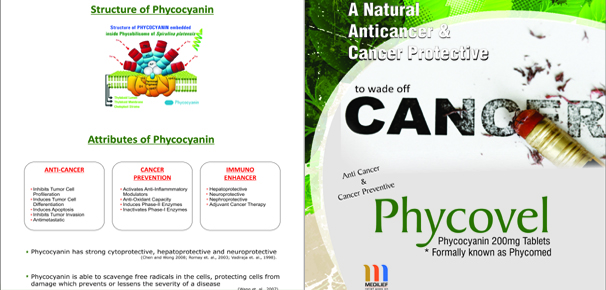
Phycovel
ANTI CANCER
-
Phycocyanin significantly inhibited the growth of human leukemia K562 cells.
- Phycocyanin, a natural product, could be a possible chemotherapeutic agent through its apoptotic Activity against tumor cells.
- C—Phycocyanin, the major light harvesting biliprotein from Spirulina plantesis is of greater importance because of its various biological and pharmacological properties. It is a potent antioxidant, anti-inflammatory and anti—cancer properties.
- Small dosage of phycocyanin daily maintains or accelerates normal control cell functions that prevent generation of malignancy such as cancer or inhibits its growth or recurrence.
Anti Cancer
&
Cancer Preventive
HEPATOROTECTION & DETOXIFICATION
- C—Phycocyanin significantly decreases Kupffer cell phagocytosis and the associated respiratory burst activity, effects that may contribute to the abolition of oxidative stress induces TNF-alpha response and NO production by hyperthyroid state.
- Phycocyanin provides protection to Liver Enzymes
- Antioxidant nature of C-Phycocyanin protects the renal cell against oxalate— induced injury and may be a nephroprotective agent.
ANTI OXIDANT
- C—Phycocyanin: a biliprotein with antioxidant, anti—inflammatory and neuroprotective effects
- Analysis revealed the antioxidant and antiurolithic potential of phycocyanin thereby projecting it as a promising therapeutic agent against renal cell injury associated kidney stone formation.
- C-Phycocyanin are able to reduce the steady state concentration of peroxyl radicals.
- Phycocyanin is able to scavenge OH & RO radicals. It also inhibits liver microsomal IIpId peroxidation.
- Study has demonstrated that phycocyanin, a biliprotein from spirulina plantesis has the ability to inhibit the O(-0, a potent physiological inorganic toxin, hence has the potential to be used as a therapeutic agent.